Buying a powder coating oven usually starts with four questions. How big should it be? Should it run on electricity or gas? What temperature does it need to reach? And what will it cost? This guide takes them one at a time, so you can talk to an oven manufacturer knowing exactly what to ask for.
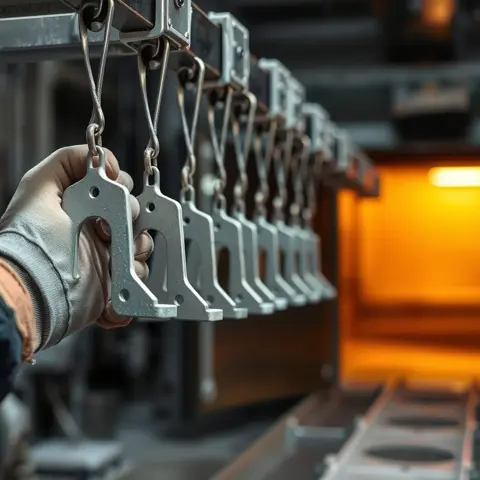
A good powder coating oven is large enough for your biggest part with room for air to move around it, rated comfortably above your powder’s cure temperature, and powered by whichever fuel is most reliable and affordable at your site. Most powders cure at roughly 160–200°C measured on the metal, but the exact schedule comes from your powder supplier. Cost depends mainly on chamber size, heating system, insulation, controls and how parts are loaded. The Ovendryers product page shows a starting price of Rs. 1,00,000, but an oven built around your parts will be quoted on its own specification.
What a Powder Coating Oven Does?
Powder is sprayed onto the part as a dry layer. The curing oven heats that layer until it melts, flows into a smooth film and cross-links into a hard finish. Too little heat leaves a weak coating. Too much can discolour it. So the oven’s job is not simply to get hot. It must hold every part, in every corner of the chamber, at the right temperature for the right time.
One practical point to keep in mind throughout this guide: the cure clock starts when the metal reaches the specified temperature, not when the oven display does. A thin sheet-metal panel catches up with the air quickly. A thick casting does not.
How to Choose the Right Powder Coating Oven Size?
Start With Your Largest Part
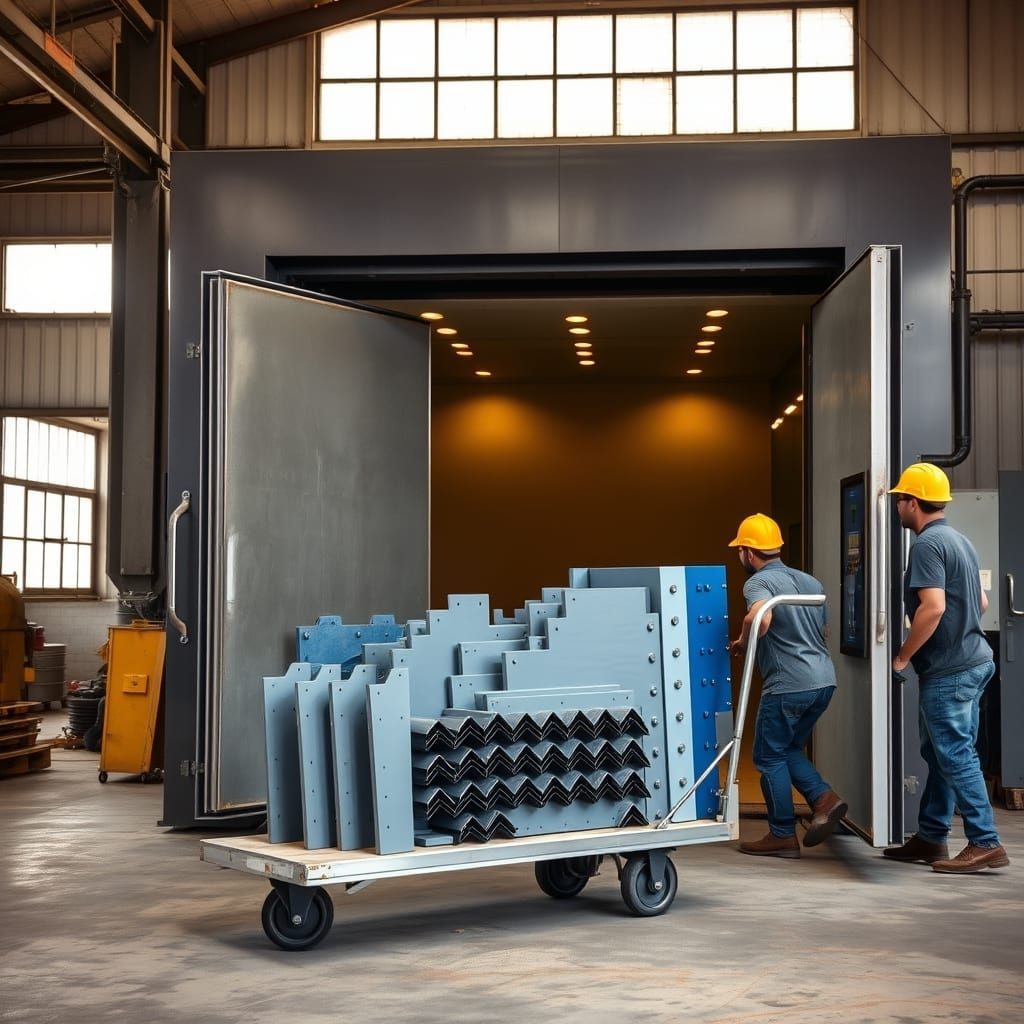
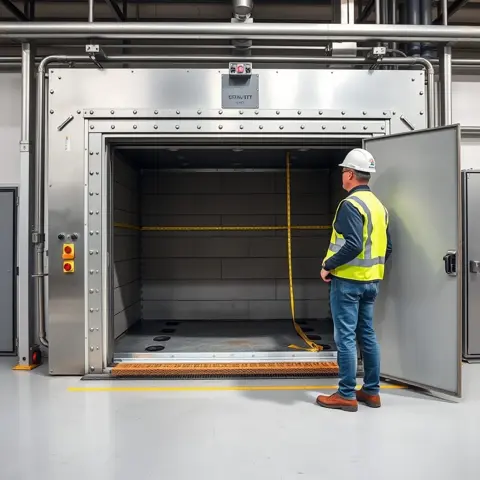
Measure the biggest part you expect to coat, including the hooks, racks or trolley that carry it. The usable internal space must be larger than that, because hot air needs room to circulate and parts should not touch the walls or each other. Ask the manufacturer what clearance they recommend instead of guessing.
For a sense of scale, the sample specification on the Ovendryers Powder Coating Oven page lists inner dimensions of 60 × 96 × 60 inches (height × depth × width), about 200 cubic feet, with a 200°C maximum temperature, 100 mm insulation, two blowers and electric heating. Treat it as a reference point, not a recommendation. The page states that size, heating capacity, temperature range and loading configuration can be customised.
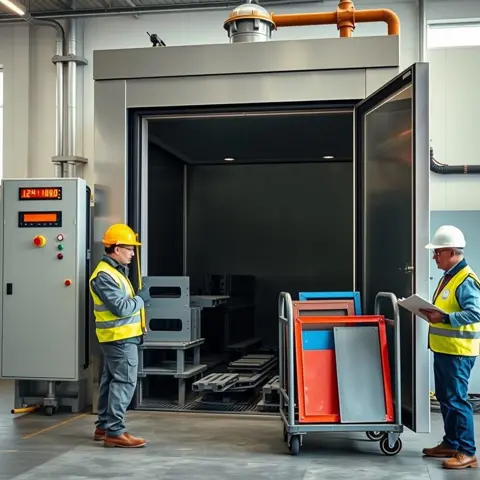
Chamber size alone does not tell you how many parts you can finish. Add up the full cycle: loading, heat-up, cure hold and unloading. As an illustration only, if one load takes 40 minutes from door closing to door opening, an oven can handle about 12 loads in an eight-hour shift. If heavy parts push the cycle to 60 minutes, that falls to eight.
Heat-up is where buyers are often surprised. In one published laboratory simulation, a 5 kg steel plate took about 15 minutes to reach 160°C in a convection oven set at 220°C. Thick, heavy or densely packed loads can lengthen your cycle considerably.
Batch Oven or Conveyor Oven?
A batch oven suits job shops, mixed part sizes and moderate volumes. You load a rack or trolley, cure it and unload it. An industrial conveyor oven suits continuous lines with similar parts and high volumes, where conveyor speed sets the time spent in the heating zones. If you plan a conveyor line, confirm that the oven is built for your powder’s cure temperature. Temperature range is a design choice, not a given.
Electric or Gas-Fired: Which Heating Type Suits You?
Neither is better in every case. The right choice depends on what your site can supply and what you pay for energy. The Ovendryers product page notes that the heating system can be electric, gas-fired or diesel-based, depending on the application and your preference.
| Factor | Electric | Gas-fired (PNG or LPG) |
|---|---|---|
| Heat source | Electric heating elements | Gas burner |
| Site requirements | Enough electrical supply, cabling and panel capacity for the oven’s connected load | Gas supply (pipeline or LPG storage), burner safety system, flue and exhaust arrangements |
| Running cost | Depends on your power tariff and the heater rating | Depends on gas price and hourly consumption |
| Often a good fit when | Your electrical supply is strong, or the oven is small to medium | Gas is available and economical at your site, or the oven is large or runs long hours |
| Main caution | Check the oven’s load against your sanctioned power before ordering | Installation and commissioning must be done by qualified people, following the manufacturer’s instructions and applicable safety rules |
Ovendryers lists both an electric industrial oven and a gas industrial oven, and both pages name powder coating curing among their applications. Heat-up speed depends more on the installed heating capacity than on the fuel itself, so ask for the estimated time to reach cure temperature with a full load.
If you lean towards gas, also ask whether the oven is direct-fired or indirect-fired. In a direct-fired design, combustion gases mix with the oven air, and some powders, particularly light shades, can be sensitive to that. Your powder supplier and oven manufacturer can tell you what suits your product.
What Temperature Does a Powder Coating Oven Need?
Powder suppliers publish cure schedules as a temperature and time measured on the part, often called object or metal temperature. Typical examples on technical data sheets include 10 minutes at 180°C, 8 minutes at 190°C or 15 minutes at 170°C. Low-bake powders can cure from around 130–160°C, and some products call for 200°C. Always follow the data sheet for your powder.
Three points matter when you specify the oven:
- Choose an oven with headroom. The metal never gets hotter than the air around it and takes time to catch up. If your powder needs 200°C on the part, an oven rated only to 200°C will not do. This does not mean running hotter than the data sheet allows. It means the oven can reach and hold the set point comfortably.
- Uniformity matters as much as the maximum. A hot spot over-bakes some parts while a cold corner under-cures others. Ask how the airflow and blower arrangement achieve even heating.
- Measure the part, not just the display. A thermocouple or data logger on a representative, fully loaded part shows what is really happening.
Under-curing can lead to poor adhesion and reduced chemical resistance. Over-curing can cause colour change and surface defects. Both end in rejected parts.
Powder Coating Oven Cost in India: What Drives the Price
Anyone quoting one price without knowing your parts is guessing. The Ovendryers Powder Coating Oven page shows Rs. 1,00,000 as a starting price. Treat that as the entry point for the base product, and confirm the current figure with the team. A customised oven is priced on its own specification. These are the factors that move the number:
- Chamber size: more steel, insulation and heating capacity.
- Heating system: electric, gas or diesel, plus the heater rating or burner size.
- Insulation and body construction: thicker insulation costs more upfront and reduces heat loss.
- Airflow system: the number and rating of circulation blowers.
- Controls: from a digital temperature controller to PLC-based controls with programmable cycles, where offered.
- Loading arrangement: shelves, trolleys, rails or a conveyor.
- Installation and utilities: transport, commissioning, and the power or gas connection at your site.
Think About Running Cost, Not Just Purchase Price
An oven that looks inexpensive can be costly to run. Ask for the heater rating in kW, or the gas consumption per hour, then multiply by your tariff or fuel price and your expected operating hours. Good insulation and well-fitted doors help keep that figure down. Over the life of the oven, energy can add up to a meaningful part of the total cost.
Questions to Ask Before You Order
- What is the maximum temperature, and how much headroom does it give above my cure temperature?
- How long will it take to reach cure temperature with a full load of my heaviest parts?
- What is the connected electrical load, or the gas consumption per hour?
- How thick is the insulation, and what is the body made of?
- Which safety features are standard, such as over-temperature protection and door interlocks?
- What do the warranty, installation and after-sales support cover? Get this in writing. The product page lists a one-year warranty.
Frequently Asked Questions
How much does a powder coating oven cost in India?
There is no single figure. The price depends on size, heating system, insulation, controls and loading arrangement. The Ovendryers Powder Coating Oven page lists a starting price of Rs. 1,00,000. Ask the team for a quotation based on your actual parts and production volume.
Can I cure different powders in the same oven?
Often yes, provided the oven’s temperature range covers the highest cure schedule you need and each powder’s time and temperature are respected. Mixing very thick and very thin parts in one load is harder, because they heat at different rates.
Is a batch oven good enough for powder coating?
For many shops, yes. The Ovendryers batch oven page lists powder coating curing as an application. Consider a conveyor oven when volumes are high and parts are fairly uniform, and you want continuous flow instead of loading and unloading each batch.
How long do parts stay in the oven?
Check your powder’s data sheet for the cure time, then add the time the part needs to heat up. A thin panel may need only a few minutes to reach temperature. A heavy casting can need far longer. This is why trials with your own parts are more reliable than a generic figure.
Can a powder coating oven be integrated into an automatic line?
According to the Ovendryers product page, yes. Powder coating ovens can be combined with conveyor systems, powder coating booths, cooling zones and automated material handling. Share your layout and line speed early, so the oven is designed around them.
Do I need a separate oven to dry parts before powder application?
Parts must be completely dry before powder is applied. Some plants use a dedicated drying oven after chemical pre-treatment, while others dry parts another way. The right choice depends on your pre-treatment process and production rate.
Next Step: Share Your Parts and Process
The easiest way to get a sensible size and price is to bring real information: your largest part dimensions, part weight, daily volume, powder cure schedule, and the power or gas available at your site. With those details, a manufacturer can recommend a configuration instead of a guess. You can look at the Ovendryers Powder Coating Oven page for the listed specification, or send an enquiry with your requirements.