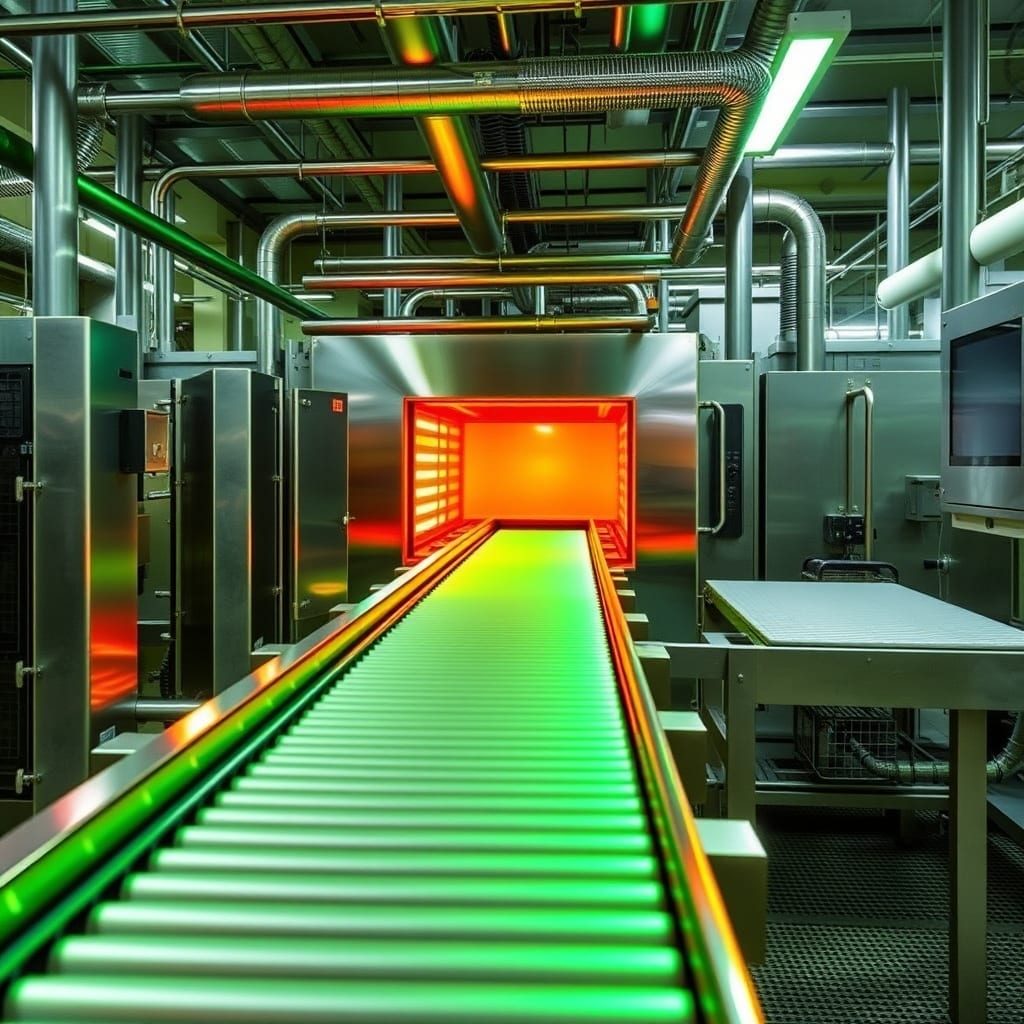
An infrared oven heats a product with radiant energy instead of first heating the air around it. That one difference explains why infrared ovens can start up quickly, shorten cure or drying cycles and use space efficiently. It also explains why the wrong emitter choice or the wrong power load can cause real problems.
Three decisions shape how an industrial infrared oven performs and what it costs: the wavelength band of the emitters, the installed power load, and the oven configuration around them. This guide covers each in plain terms, so you know what to ask before you request a quote.
There is no single figure for an infrared oven. The cost depends on chamber size, emitter type, installed kW, zone control, conveyor system and the process you need to run. A listed “starting price” is only a reference point for a basic configuration, and it should never be treated as the cost of your project.
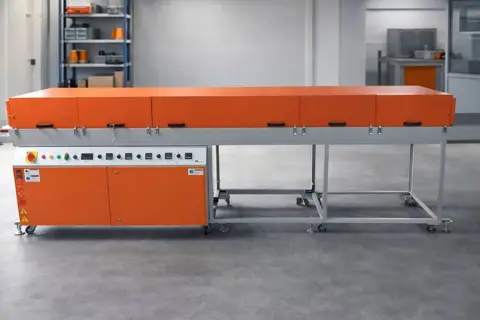
What Is an Infrared Oven and How Is It Different from a Hot Air Oven?
In a hot air oven, heaters warm the air and fans move it around the product. The product heats up as the air transfers energy to it. In an infrared oven, emitters radiate energy that travels directly to the product surface, where it is absorbed and turns into heat.
Direct radiant heating is why infrared is used for drying, curing, preheating and baking on many production lines. It is not automatically better than convection. A hot air oven usually copes better with complex shapes, deep recesses and bulky loads, because moving air reaches surfaces that radiation cannot see. Many finishing lines get the best result by using each method where it works best.
Understanding IR Wavelength: Short, Medium and Long
Infrared covers a wide band of wavelengths, measured in micrometres (µm). Industrial emitters are usually grouped into three classes. The boundaries vary slightly between manufacturers, so treat the figures below as approximate.
| Type | Approximate wavelength | Typical emitter characteristics | Response time | Often used for |
|---|---|---|---|---|
| Short-wave (near-infrared) | About 0.75 to 1.4 µm | Quartz or halogen emitters with very hot filaments, roughly 1,800 to 2,400°C | About one second | Fast lines, heavy coatings, high power density, deeper penetration into some materials |
| Medium-wave | About 1.4 to 3 µm | Quartz, ceramic or ribbon emitters running cooler, often around 800 to 1,000°C | Several seconds to about a minute or more, depending on the emitter | Paint and coating drying, thin films, many plastics, water-based products |
| Long-wave (far-infrared) | Above about 3 µm | Ceramic or sheathed elements, often around 300 to 700°C | Minutes | Gentle, even heating of large or heavy parts, and tougher shop environments |
These figures are general emitter-manufacturer ranges, not specifications of any particular Ovendryers oven.
How to Match Wavelength to Your Material?
Materials absorb infrared differently depending on wavelength. A coating that absorbs strongly in the medium-wave range may reflect much of a short-wave emitter’s output, and the reverse can also be true. Colour, surface finish, thickness and moisture content all play a part.
As a rule of thumb, short-wave suits applications that need very high intensity and fast response. Medium-wave is a common choice for coatings and drying because many coatings and water-based materials absorb it well. Long-wave suits slower, gentler heating. Treat that as a starting point only. The only dependable way to confirm the match is to test your actual product, or to share full process details with the oven manufacturer.
The Ovendryers infrared oven page states that short-wave, medium-wave or long-wave technology can be used depending on the material, heating speed and production requirement. Confirm the emitter type for your configuration in writing before you order.
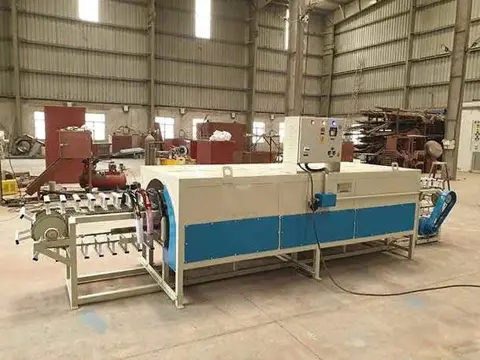
A Simple Way to Sanity-Check Energy Demand
The basic physics is straightforward. The energy needed per hour is roughly the mass of the product, multiplied by its specific heat and by the temperature rise you need.
Illustrative example: heating 100 kg of steel parts per hour by 150°C takes about 7,300 kJ, which is only about 2 kW of absorbed energy in theory. A real oven needs a larger installed load, because some radiation is reflected, the coating and moisture need energy too, and the chamber loses heat. This example shows how to think about the problem. It is not a sizing method, and your oven manufacturer should do the actual calculation.
Several factors push the real figure up or down:
- Product mass, material and thickness
- Target temperature and allowed heat-up time
- Conveyor speed and product spacing
- Surface colour and finish
- Number of independently controlled heating zones
Zoning is worth understanding early. Zones let you switch off or reduce emitters where there is no product, which can reduce wasted energy on lines with gaps or mixed part sizes. Electrical supply, protection and installation should always be planned with a qualified electrical engineer and checked against local regulations. Do not size cables or breakers from a brochure figure.
Infrared Oven Price Factors
When two quotes for an “infrared oven” differ widely, the equipment is usually not the same. These are the main cost drivers:
- Chamber size and number of heating zones. A longer tunnel with more zones needs more emitters, reflectors and controls.
- Emitter type and installed kW. Short-wave, medium-wave and long-wave systems differ in emitter cost, supporting hardware and expected life.
- Batch or conveyorised design. A conveyor oven adds belt or chain systems, drives and speed control.
- Control system. A basic temperature controller costs less than multi-zone control with recipe handling and data logging.
- Construction and insulation. Steel gauge, insulation thickness and reflector quality affect both price and running cost.
- Air handling. Some processes need extraction for solvents or fumes, or airflow to keep the chamber stable.
- Customisation. Special dimensions, loading arrangements or line integration add engineering time.
- Installation, commissioning and training. Check whether they are included or quoted separately.
The product page lists a starting price for a standard infrared oven, along with a specification table showing a maximum temperature of 220°C for the listed model. Treat these as reference figures. A customised build will be quoted against your own requirements, so ask for a written specification before you compare prices.
Where Infrared Works Well, and Where It Needs Care
Infrared ovens are widely used for drying and curing coatings, preheating metal parts, processing plastics and baking. They tend to suit flat or simple shapes that the emitters can “see” easily.
There are limits. Radiation travels in straight lines, so deep recesses and hidden surfaces may heat more slowly than exposed ones. Large differences in part thickness or surface colour can also cause uneven results.
For powder-coated products, a common approach is to use infrared for a fast initial stage and a convection stage to finish the cure, which suits complex geometries better. If this is your process, compare the setup against a dedicated powder coating oven, and always follow the cure schedule published by your powder supplier.
Questions to Ask Before Requesting a Quote
- What is the product, its material, thickness and surface finish?
- What temperature and process time does the product need, according to the material or coating supplier?
- How many parts per hour, and in what batch or line arrangement?
- What are the largest and smallest part dimensions, and how are they loaded?
- Which emitter type is proposed, and why was it chosen for this material?
- What is the installed kW, and what electrical supply does it need?
- How many heating zones are there, and can they be controlled separately?
- Can a sample trial be run before you commit?
- What is included: installation, commissioning, operator training and spare emitters?
Frequently Asked Questions
What is the difference between short-wave and medium-wave infrared?
Short-wave emitters run at higher filament temperatures, respond in about a second and deliver very high power density. Medium-wave emitters run cooler, respond more slowly and are widely used for drying and coating processes. The better choice depends on what your product absorbs.
How is an infrared oven’s power load calculated?
The manufacturer works from your product mass, material, temperature rise, line speed and heat losses, then adds allowances for the chamber and process. A rough calculation based only on product mass will understate the real figure, so it is best done by the supplier.
Is an infrared oven cheaper to run than a hot air oven?
It can be for the right process, because infrared heats the product directly and can respond quickly. It is not guaranteed. Running cost depends on the product, the loading pattern, insulation and how well the oven is controlled.
Can an infrared oven be used for powder coating?
Yes, infrared is used in some powder coating setups, often alongside convection heating. Shape, colour and film thickness all affect the result, so confirm the process with your oven manufacturer and your powder supplier.
What affects the price of an infrared oven the most?
Chamber size, emitter type, installed kW, zoning, conveyor system and the control package usually have the biggest influence. Customisation, installation and training can add to the total.
Should I test my product before buying?
Whenever possible, yes. Different materials, colours and thicknesses respond differently to infrared, so a sample trial reduces the risk of choosing the wrong emitter or power level.
Choosing the Right Infrared Oven
The best infrared oven is the one matched to your product, not the one with the highest kW rating. Start with the material, the process and the output you need. Then agree the emitter type, power load and layout in writing.
If you have a specific application in mind, you can review the infrared oven range or send your process details to the Ovendryers team and ask for a configuration that fits your line.